
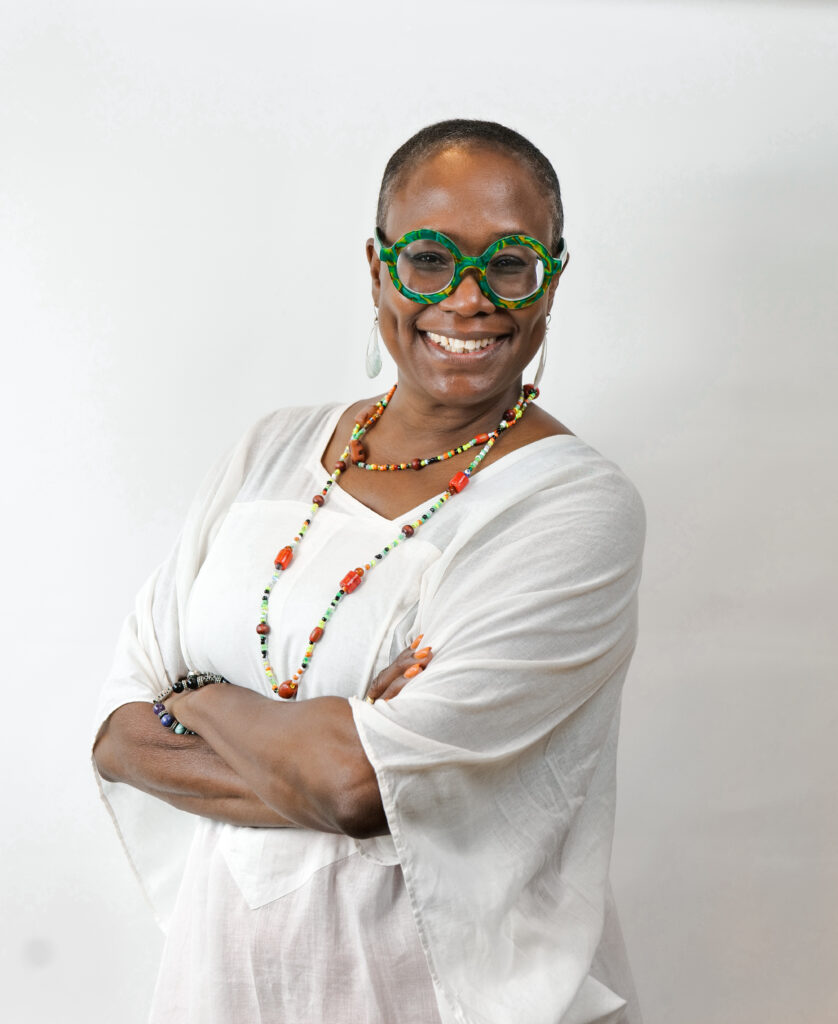
WAFRIC Awards 2026 Nominee Spotlight | Educational Creator of the Year | Senegal
Education is not limited to classrooms, textbooks and examinations. It can also happen through stories, games, imagination, creative exploration and experiences that encourage children to ask questions and discover the world around them.
For Senegal-based educator, author and social entrepreneur Karima Grant, this understanding has become the foundation of a career dedicated to transforming how children learn and develop. Through educational initiatives, children’s literature, creative learning spaces and culturally relevant animation, she has worked to make learning more engaging while encouraging African children to see themselves as capable creators and problem-solvers.
Her work connects education with creativity, placing children’s imagination and confidence at the centre of the learning experience.
At the West African Citizens Awards 2026, Karima Grant is nominated for Educational Creator of the Year, representing Senegal.

From Education to a New Vision for Learning
Born in the United States to a Senegalese mother and a Saint Lucian father, Karima Grant has built much of her professional and social impact work in Senegal.
Her educational background includes studies at Mount Holyoke College, where she studied African Studies. She also developed experience as an educator and leadership consultant, working with educational institutions and organisations across Africa and the United Kingdom.
Her return to Senegal was an important turning point in her professional journey. Having worked as a teacher, she became increasingly concerned about the gap between what children were learning in conventional school environments and the creative, problem-solving and practical skills they would need in the future.
Rather than viewing this gap as an unavoidable limitation, Grant began exploring ways to make education more relevant to children’s everyday experiences.
Her approach was built around a simple but important idea: children should not be treated only as recipients of information. They should also be encouraged to experiment, imagine, question, create and actively participate in producing knowledge.
This philosophy would become central to the educational initiatives she went on to establish.
ImagiNation Afrika: Encouraging Children to Become Changemakers
In 2005, Grant founded ImagiNation Afrika, a non-profit organisation focused on children’s creativity, learning and development. The initiative grew from her interest in helping young people develop the confidence and abilities to contribute meaningfully to their communities.
One of its early activities involved writing and illustration workshops organised in Dakar in 2007. According to Devex’s profile of the organisation, the workshops helped 40 young authors from the Fass district publish their first book.
The experience reinforced the importance of providing children with opportunities to express themselves, develop ideas and participate in creative production.
ImagiNation Afrika subsequently developed programmes that combined art, mathematics, culture, storytelling and experiential learning. Rather than teaching subjects in isolation, the organisation explored how different areas of knowledge could be connected through activities children could understand and enjoy.
Its work reflects Grant’s belief that creativity is not an optional addition to education. It is an important part of helping children develop the confidence and independence needed to address challenges in their communities.
Ker ImagiNation: Learning Through Play and Discovery
In 2015, Grant established Ker ImagiNation Afrika, a cultural and educational hub for children in Dakar.
Described by UNICEF as Senegal’s first cultural and educational hub for children, the initiative was designed to provide a physical environment where children could learn through play, experimentation and collaborative activities.
The hub serves children from six months to 12 years old, with activities intended to stimulate curiosity, creative confidence and leadership.
Its approach moves beyond the conventional idea that learning must always involve a teacher delivering information while children listen. Instead, facilitators encourage children to explore, test ideas, work together and find practical solutions.
One example of this philosophy is the Marche Math Project, which uses the familiar environment of a Senegalese market to help primary-school children strengthen their understanding of mathematics.
By connecting mathematical concepts to everyday cultural and commercial experiences, the project makes learning more relatable and practical.
This approach demonstrates how local environments and familiar experiences can become powerful educational resources.
The initiative also received international recognition. In 2019, Ker ImagiNation won the Best Children’s Museum award from Hands On! International Association of Children’s Museums and the European Museum Academy.
The recognition highlighted the value of its approach to children’s learning and its contribution to innovative educational spaces.
Creating Educational Stories Through Literature
Grant’s work also extends into children’s literature.
She is the author of five children’s books, using storytelling as another means of supporting children’s imagination, literacy and understanding of the world.
Her writing background includes the children’s picture book Sofie and the City, as well as fiction published in literary platforms such as Solstice Literary Magazine.
For Grant, storytelling is connected to the wider educational philosophy behind her work. Stories can help children explore ideas, recognise themselves in characters, understand different experiences and develop the confidence to imagine possibilities beyond their immediate surroundings.
Children’s literature is therefore not simply a form of entertainment. It can become an accessible way to introduce knowledge, encourage curiosity and support emotional and intellectual development.
Her combination of writing, education and creative programme development demonstrates how educational content can take different forms while serving a common purpose.
Playmakers Studio: Bringing African Culture into Educational Animation
An important development in Grant’s more recent creative work is Playmakers Studio, an animation initiative focused on producing educational content rooted in African cultures.
Developed through Ker Imagination Education Services, Playmakers Studio seeks to create locally relevant educational media for African children.
Its work includes the development of animated educational series such as Rama & Aïcha and Xam Xam.
The importance of this approach lies in the relationship between education and cultural representation. Children should have access to learning materials that not only teach useful concepts but also reflect environments, experiences and cultural references they can recognise.
According to an Afrique Créative project profile, Playmakers Studio produced six new episodes and updated five existing episodes across its educational series. The project also developed visual identities for its productions and conducted tests with children.
The same profile reported that the initiative was developing partnerships with Radio Télévision Sénégalaise (RTS) and Senegal’s Ministry of Education.
The animated series Rama & Aïcha also received the Audience Prize in the Animation category at the Vues d’Afrique International Film Festival, according to Afrique Créative.
This work represents an important extension of Grant’s educational philosophy: using animation and storytelling to make learning accessible, engaging and culturally meaningful.
Developing Learning Ecosystems Beyond the Classroom
Grant’s work has also expanded into early childhood education and parenting support.
Through Ker Imagination Educational Services and the PlayLabs initiative, she has been involved in developing innovative childcare centres and preschool learning environments in Senegal.
PlayLabs was established with co-founder Chakera McIntosh and entered the investment portfolio of I&P Accélération au Sahel in 2021.
The initiative focuses on early childhood development, welcoming children from approximately 10 months to five years old. Its educational approach incorporates play-based activities, project-based learning and active parental participation.
The model draws inspiration from the Reggio Emilia educational approach, which places emphasis on children’s curiosity, creativity, exploration and participation in their own learning process.
This work recognises that children’s development begins long before formal primary education. Their early experiences, relationships with caregivers and opportunities to explore their environment all contribute to how they learn and grow.
Grant’s wider professional journey therefore extends beyond creating educational content. It involves developing the spaces, programmes and support systems through which children can benefit from creative learning.
Recognition and Wider Educational Leadership
Grant’s work has attracted recognition from international organisations and networks.
In 2015, she was elected an Ashoka Fellow for her approach to changing education in Senegal through creativity, self-reliance and experiential learning.
The Ashoka profile describes her approach as one that turns learning into games connected to children’s local contexts, helping them become active learners and creators of knowledge.
Her work has also attracted partnerships and support from institutions including UNICEF, the Open Society, the United States Embassy, the National Museum of African American History and Culture, and the Van Leer Foundation.
In May 2024, the Van Leer Foundation welcomed her as its Regional Representative for Africa. In that capacity, she brings her experience in early childhood development, educational innovation and social entrepreneurship into wider conversations about the environments children need to thrive.
Her professional journey reflects a continued commitment to improving the conditions in which children learn, develop confidence and participate in society.
Why Karima Grant Is Nominated for WAFRIC Awards 2026
The West African Citizens Awards recognises individuals whose contributions deserve acknowledgement across the region.
Karima Grant’s nomination for Educational Creator of the Year, representing Senegal, highlights a body of work that brings together educational innovation, children’s literature, creative learning and culturally relevant media.
From founding ImagiNation Afrika to establishing Ker ImagiNation, developing PlayLabs and advancing educational animation through Playmakers Studio, her work demonstrates that educational creation can extend far beyond conventional teaching materials.
Her approach places African children’s experiences, creativity and cultural identities at the centre of learning. It also challenges the assumption that education must be limited to memorisation and classroom instruction.
Through stories, play, animation and experiential learning, Grant has worked to create opportunities for children to imagine, explore and become active contributors to their communities.
As WAFRIC Awards 2026 celebrates exceptional West Africans across different fields, Karima Grant represents Senegal in a category that recognises the people using creativity and knowledge to shape how future generations learn.
Support Karima Grant at WAFRIC Awards 2026
Karima Grant is nominated for Educational Creator of the Year, representing Senegal, at the West African Citizens Awards 2026.
This edition carries the theme:
Recognizing the Unseen. Celebrating the Exceptional.
Support the nominee and participate in the official public voting process.
Vote here: https://wafricawards.com.ng/official-public-voting/
Read the voting procedures and criteria: https://wafricawards.com.ng/wafric-awards-2026-voting-procedures-and-criteria/
Public voting closes on 15 November 2026. Public votes contribute to the process but do not solely determine the winners. Final assessments also consider achievements, contributions and impact in accordance with the published criteria.
West African Citizens Awards 2026 — Recognizing the Unseen. Celebrating the Exceptional.
Research Sources
- UNICEF — Karima Grant: Senegal’s cultural and educational hub for children
- Ashoka — Karima Grant, Ashoka Fellow
- Van Leer Foundation — Karima Grant, Regional Africa Representative
- Van Leer Foundation — Interview with Karima Grant
- Afrique Créative — Karima Grant and educational innovation
- Afrique Créative — Playmakers Studio project profile
- I&P — PlayLabs, Senegal
- Devex — ImagiNation Afrika
- Solstice Literary Magazine — Karima Grant’s writing profile