
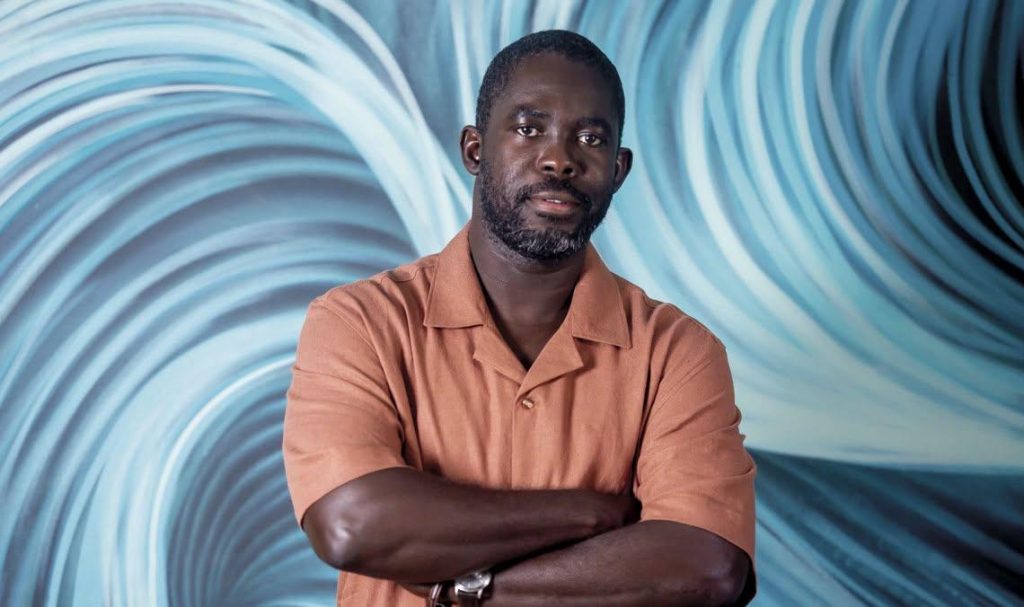
Nominee: Miguel de Barros
Category: Educational Creator of the Year
Country: Guinea-Bissau 🇬🇼
Education extends far beyond the classroom. It also happens when research challenges established assumptions, when public conversations illuminate overlooked realities and when knowledge is shared in ways that help communities understand the forces shaping their lives.
For Miguel de Barros, knowledge is closely connected to social transformation. A Guinean sociologist, researcher, author and civic activist, he has built a professional journey around understanding society, documenting African experiences and encouraging informed conversations about education, culture, governance, youth development and environmental sustainability.
Nominated for Educational Creator of the Year at the WAFRIC Awards 2026, Miguel represents an approach to educational communication rooted in research, public engagement and the sharing of knowledge beyond conventional academic spaces.
His work offers an important perspective on what educational creation can mean in a region where access to relevant information, locally grounded research and meaningful public dialogue remain essential to development.

A Foundation in Sociology and Social Research
Born in Bissau, Guinea-Bissau, in 1980, Miguel de Barros pursued higher education in Portugal, graduating in sociology from the institution now known as ISCTE – University Institute of Lisbon, where he also specialised in planning.
His academic background provided a foundation for examining the relationships between individuals, communities, institutions and the wider social systems in which they operate.
Over the course of his career, his research interests have included youth, volunteering, civil society, media, human rights, food security, migration, rural women, racism, literature and rap music.
These subjects may appear distinct, but they share an important connection: each offers a way of understanding how societies develop, how people experience change and how communities respond to social and economic challenges.
Miguel has worked with Guinea-Bissau’s National Institute of Studies and Research and with the Centre for Transdisciplinary Studies of Communication and Consciousness at the Federal University of Rio de Janeiro in Brazil. He is also associated with the Council for the Development of Social Science Research in Africa, known as CODESRIA.
This combination of academic research, institutional experience and civic engagement informs his approach to knowledge-sharing. Rather than treating research as an activity confined to specialists, his public work connects scholarly inquiry with questions that matter to everyday life.
Education Beyond Conventional Classrooms
One of the most significant dimensions of Miguel’s public work is his engagement with education as a social and cultural process.
In a discussion featured by Brazil’s Campaign for the Right to Education, he participated in a conversation about Guinea-Bissau’s educational history, educational autonomy and the relationship between learning, cultural identity and community participation.
The discussion highlighted the importance of recognising local knowledge and involving communities in the development of educational content. It also explored the legacy of educational initiatives associated with Guinea-Bissau’s history and the work of organisations seeking to make education more responsive to local realities.
This perspective is particularly relevant to countries where education systems must navigate limited resources, institutional challenges and the need to preserve cultural knowledge while preparing young people for a changing world.
For Miguel, educational questions cannot be separated entirely from the societies in which schools and learning institutions operate. Community participation, historical understanding and cultural identity all have a role in shaping how knowledge is produced and transmitted.
His contribution to these conversations demonstrates how research and public dialogue can support education by helping people understand not only what is taught, but also whose experiences and knowledge are represented.
Making Research Accessible Through Writing and Publishing
Miguel’s educational contribution also extends into writing, editing and the dissemination of scientific and cultural knowledge.
He founded Corubal, a cooperative dedicated to the production and dissemination of cultural and scientific works in Guinea-Bissau. The initiative reflects a commitment to making knowledge and cultural production more visible within the country.
His published works include Juventude e Transformações Sociais na Guiné-Bissau (Youth and Social Transformations in Guinea-Bissau, 2016). He has also contributed to publications examining civil society and the state, food sovereignty and nutrition, women’s participation in political decision-making, and the relationship between media, human rights and public opinion.
These subjects are important to educational communication because they provide readers with frameworks for understanding issues that affect their communities and institutions.
Writing can preserve knowledge, create a record of social experiences and give future researchers, students and practitioners material with which to develop their own understanding.
Through research, editing and publishing, Miguel contributes to an intellectual environment in which African experiences can be studied, documented and discussed from perspectives informed by the continent’s own histories and social realities.
Youth, Citizenship and the Power of Knowledge
Youth development is another recurring theme in Miguel’s work.
His research examines youth participation, volunteering, social transformation and the role of civil society. These subjects connect education with the practical question of how young people acquire the knowledge, confidence and opportunities needed to participate meaningfully in society.
Education, in this context, is not limited to formal qualifications. It also includes understanding civic responsibilities, developing critical thinking, learning from community experiences and recognising opportunities to contribute to collective progress.
Miguel’s work with civil society organisations has placed him in conversations about how communities organise themselves, how young people participate in social initiatives and how locally grounded knowledge can inform development.
This emphasis is especially important for younger generations navigating economic uncertainty, changing labour markets and the growing influence of digital information.
By bringing research and social questions into public conversations, knowledge-focused communicators can help audiences move beyond simply receiving information to asking questions, examining evidence and developing a more informed understanding of their circumstances.
Tiniguena: Connecting Knowledge, Communities and Environmental Sustainability
Since 2012, Miguel de Barros has served as executive director of Tiniguena, a Guinean non-governmental organisation dedicated to environmental protection, biodiversity conservation and community-based development.
Tiniguena’s work provides another important context for understanding his approach to education and public knowledge.
Environmental sustainability requires more than scientific information alone. It also depends on how communities understand ecosystems, how local knowledge is valued, how resources are managed and how people respond to changes affecting their livelihoods.
Through his leadership and public engagement, Miguel has helped bring environmental and development questions into broader conversations about society and the future of Guinea-Bissau.
His work has included discussions about food sovereignty, sustainable practices and the effects of climate change on vulnerable communities.
In a December 2025 interview with Revista Periferias, he discussed the unequal impacts of climate change on African countries, including Guinea-Bissau, and the consequences for agriculture, water access and food systems.
Such public discussions are an example of educational communication in practice: research and experience are used to explain complex issues, connect them to people’s everyday lives and encourage a more informed understanding of the challenges facing the region.
Culture, Communication and African Knowledge Production
Miguel’s work also crosses the boundaries between research, culture and public communication.
As a researcher interested in media, literature and rap music, he approaches cultural expression as an important part of understanding society. Cultural works can preserve memories, communicate social criticism, represent marginalised experiences and provide alternative ways of interpreting history and identity.
His involvement in cultural and scientific publishing through Corubal reinforces this connection between education and cultural expression.
This approach challenges the idea that educational content must always take the form of formal lessons. Interviews, books, public discussions, cultural commentary and research-based media can also provide valuable opportunities for learning.
For audiences across West Africa, this broader understanding of education matters. It creates room for local histories, community experiences and African intellectual traditions to participate in conversations that shape contemporary knowledge.
Miguel’s career reflects a sustained engagement with these questions through research, writing, institutional leadership and public dialogue.
Recognition for Research and Social Impact
Miguel’s work has received recognition beyond Guinea-Bissau.
In 2018, he received the Pan-African Humanitarian Award for Excellence in Research and Social Impact, according to published professional biographies. He has also been recognised for his contributions to research and civil society engagement.
His professional experience brings together several complementary areas: sociological research, educational discussion, publishing, environmental advocacy and community-oriented development.
These activities provide context for his nomination in a category focused on educational creation. His profile is not that of a conventional entertainment-focused creator; rather, his documented contribution centres on producing, interpreting and sharing knowledge about society and development.
That distinction is important because educational communication can serve different audiences and take different forms. Research-based interviews, books, public conversations and accessible explanations can all contribute to how people learn about their world.
Why Miguel de Barros Is a WAFRIC Awards 2026 Nominee
The Educational Creator of the Year category provides an opportunity to recognise individuals who contribute to learning, knowledge-sharing and educational engagement across West Africa.
Miguel de Barros brings a distinctive perspective through his work as a sociologist, researcher, author and civic leader from Guinea-Bissau.
His contribution connects education with social research, cultural identity, youth participation, environmental awareness and the dissemination of African knowledge. Through his writing, interviews, research and public engagement, he contributes to conversations that help audiences examine the forces shaping their communities and societies.
His work also underscores the importance of locally grounded knowledge: understanding African development requires attention to the histories, cultures, institutions and lived experiences of African communities themselves.
As WAFRIC Awards 2026 recognises professionals from across the region, Miguel’s nomination highlights the place of knowledge-driven communication within West Africa’s wider creative and intellectual landscape.
Support Miguel de Barros
Miguel de Barros is representing Guinea-Bissau in the Educational Creator of the Year category at the WAFRIC Awards 2026.
Support his nomination through the official public voting platform:
Public voting runs from October 12 to November 15, 2026. Public votes contribute to the process but do not solely determine the eventual winner. Final selection follows the published WAFRIC Awards procedures and criteria.
Read the full voting procedures here:
WAFRIC Awards 2026 — Recognizing the Unseen. Celebrating the Exceptional.