
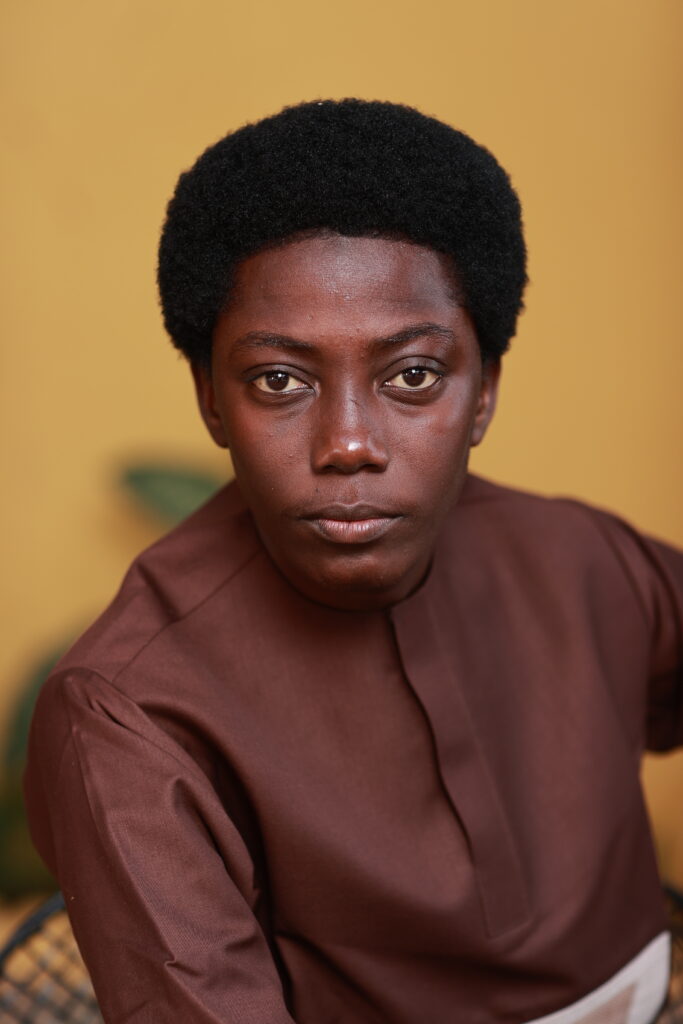
WAFRIC Awards 2026 Nominee Spotlight | Actor of the Year | Senegal 🇸🇳
An actor’s craft is not simply about memorising dialogue or appearing before a camera. It is about understanding human behaviour, inhabiting another person’s circumstances and communicating emotions that audiences can recognise, even when those emotions remain unspoken. For Senegalese actor Pape Aly Diop, this connection between performance and human experience is an important part of his developing place in contemporary African cinema.
Diop has attracted growing attention through film and television projects including Timpi Tampa, Géej Amul Banxaas, Playgame and Blood River. His performance in Timpi Tampa earned him the Best African Hope — Feature Film award at the 2025 Sotigui Awards, placing him among the emerging acting talents recognised at one of the major events celebrating African cinema and its diaspora.
His nomination for Actor of the Year at the West African Citizens Awards (WAFRIC Awards) 2026 offers an opportunity to examine his journey, the roles that have shaped his screen career and the stories through which he is contributing to Senegalese audiovisual culture.
Discovering a Passion for Acting
In a February 2025 profile published by Senegalese newspaper Le Soleil, Diop described how his interest in cinema developed while growing up. His mother was passionate about films, and watching them with her helped nurture his own fascination with screen performance.
That early interest eventually became a professional pursuit. Before establishing himself through acting roles, Diop appeared in advertisements. An unexpected opportunity then changed the direction of his career: he accompanied his younger sister to a casting session for which he had initially applied on her behalf. At the studio, a casting director noticed him and suggested that a role suited his profile. He auditioned successfully, leading to his first project.
The experience illustrates how an unplanned opportunity can become a turning point when it meets preparation and genuine interest.
Diop subsequently pursued acting training at Acting Center, Saint Style Académie and the École internationale des acteurs et actrices de Dakar (EIAD). These experiences formed part of his effort to develop the discipline and practical skills required for a profession built around interpretation, physical expression, emotional awareness and collaboration.
His trajectory reflects a gradual progression from an early love of cinema towards a more deliberate commitment to acting.
Developing a Distinctive Approach to Performance
In its February 2025 profile, Le Soleil described Diop’s acting in terms of subtlety, restraint and attention to the small gestures through which characters communicate emotion. Rather than depending exclusively on exaggerated expressions or dramatic outbursts, his performances were characterised as attentive to silences, looks and the tension between what a character reveals and what remains concealed.
This approach is particularly relevant to screen acting, where a close-up can communicate uncertainty, grief, determination or inner conflict without requiring a lengthy speech.
An actor must understand not only what a character says, but also the circumstances behind those words. A pause can suggest hesitation; a change in posture can reveal discomfort; a seemingly ordinary exchange can carry the weight of a difficult decision.
Diop’s developing screen career has brought him into stories involving young people, social expectations and personal choices. Such material gives performers opportunities to communicate complex experiences through restrained, believable characterisation.
His artistic development also reflects the importance of training. Acting requires more than natural charisma: it involves learning how to interpret a script, understand a character’s motivations, respond to fellow performers and remain consistent within a director’s creative vision.
For Diop, the combination of professional training and practical screen experience has helped establish the foundations of his work.
Timpi Tampa: A Defining Performance
One of the most significant projects in Diop’s career to date is ** Timpi Tampa **, a Senegalese-French comedy-drama directed by Adama Bineta Sow and released in 2025.
The film confronts colourism and the social pressure surrounding skin-lightening practices. Its central character, Khalilou, faces the consequences of damaging beauty standards after his mother develops cancer linked to skin depigmentation. In an effort to challenge a competition that privileges lighter skin, he disguises himself as Leila and enters the Miss Étudiantes pageant, where dark-skinned women struggle to receive recognition.
The story uses an unusual narrative premise to examine a serious social issue: the way beauty standards can shape self-image, influence relationships and impose unequal expectations on individuals.
As the film’s lead performer, Diop carries a character whose journey requires him to navigate identity, social judgement and the emotional consequences of a deeply rooted prejudice. The role places acting at the centre of a wider conversation about colourism and the pressures faced by young people.
The production attracted attention at African film events. In May 2025, reporting around its premiere in Dakar highlighted its reception at the Vues d’Afrique festival in Montreal, where Diop received a Best Actor award and the film earned the Agir pour l’égalité prize and a special jury mention. The film had also received a mention in the Perspectives section at FESPACO 2025.
In November 2025, Diop received the Best African Hope — Feature Film award at the tenth Sotigui Awards in Ouagadougou for his performance in Timpi Tampa.
These recognitions mark an important chapter in his career. They draw attention not only to his individual performance, but also to the capacity of Senegalese productions to engage audiences with stories that combine entertainment and social reflection.
Géej Amul Banxaas: Youth, Pressure and the Search for a Way Forward
Diop’s work also includes ** Géej Amul Banxaas **, a short fiction film directed by Khalifa Bâ and Ivere Hounkpatin. The title is translated as At Sea, Without Support.
The film follows Mamadou, a 17-year-old who boards a pirogue in an attempt to escape social pressure. His journey brings the narrative into contact with the difficult circumstances that can influence young people’s decisions to leave home and pursue uncertain futures elsewhere.
Rather than treating migration as an abstract subject, the story approaches it through an individual whose choices emerge from a particular social environment. The journey raises questions about responsibility, vulnerability and the forces that can make a dangerous departure appear to be the only available option.
The film received significant festival recognition in 2026. In April, the Senegalese national news agency reported that it won first prize at the seventh International Short Film Gala in Saint-Louis. In July, Le Soleil reported that it also won first prize in the fiction short-film category at the fourth International Film and Music Festival of Kpalimé in Togo.
These achievements demonstrate the reception of the production beyond a single screening context.
For actors, stories of this kind require attention to the circumstances behind a character’s actions. An effective performance must allow audiences to understand the emotional and social pressures influencing a character without reducing that person to a symbol.
Diop’s involvement in the film adds another socially grounded project to his growing screen portfolio and connects his work to wider conversations about youth, mobility and opportunity in West Africa.
Expanding His Screen Experience Through Television
While feature films and short films have been important to his public profile, Diop has also worked in television.
His screen credits include ** Playgame **, a 2024 series, in which he is credited as MD jeune, and ** Blood River **, a 2024 mini-series, in which he is credited as Henri.
These projects demonstrate his participation in different production formats. Film acting often requires a performer to build a character’s emotional journey within a relatively concentrated narrative. Television can introduce different demands, including continuity across episodes, evolving relationships and the need to sustain a character over a longer storyline.
Experience across formats can help actors broaden their interpretive range and become familiar with different approaches to directing, production schedules and storytelling.
Diop’s filmography also includes Une vie de mec pour Wido, a production mentioned in his Le Soleil profile. Taken together, these projects provide a picture of a performer building his experience through a range of Senegalese and internationally connected audiovisual productions.
His career remains in development, but the variety of roles and formats in which he has appeared provides a foundation for further growth.
An Actor’s Relationship with Senegalese Society
Diop’s understanding of acting extends beyond the performance itself. In his interview with Le Soleil, he expressed the view that Senegalese cinema needs more productions and should be willing to address profound and sometimes sensitive subjects.
He also described the responsibility of artists as giving a voice to people whose experiences may otherwise go unheard. In his view, cinema can bring social problems into focus, encourage audiences to consider different perspectives and open space for reflection without forcing viewers to adopt a particular position.
This philosophy is relevant to the projects associated with his career. Timpi Tampa explores colourism and harmful beauty standards, while Géej Amul Banxaas examines the pressures that can shape a young person’s decision to undertake a dangerous journey.
Both films place individual experiences within broader social realities. Their narratives invite audiences to look beyond the immediate actions of the characters and consider the conditions influencing their choices.
For an actor, participating in such productions is an opportunity to contribute to stories that entertain while also encouraging discussion. The responsibility is to make the characters human and credible, allowing audiences to engage with the story through the people at its centre.
Diop’s publicly expressed views suggest that he sees acting as both an artistic discipline and a way of contributing to wider conversations about society.
Building a Career Beyond National Borders
Senegalese cinema has a long history of exploring social change, identity, family and the complexities of everyday life. Contemporary productions continue that tradition while seeking audiences through television, streaming, international festivals and partnerships with filmmakers and distributors abroad.
Diop’s work reflects this increasingly connected environment. His projects have reached festival platforms in Africa and beyond, while Timpi Tampa brought him recognition in both Montreal and Ouagadougou.
Such exposure can help emerging actors build professional relationships, attract attention from casting teams and introduce their performances to audiences who may not otherwise encounter Senegalese films.
International recognition does not replace the importance of local storytelling. Rather, it can create opportunities for stories rooted in Senegalese experience to travel, while allowing actors to contribute to the wider African screen industry.
Diop’s progression illustrates how a performer can build a career through a combination of training, screen roles, collaborations and recognition. His next steps will depend on the projects he undertakes, the characters he explores and the continued development of his craft.
Why Pape Aly Diop Is a WAFRIC Awards 2026 Nominee
The Actor of the Year category at WAFRIC Awards 2026 celebrates acting talent and contributions to screen performance across West Africa.
Diop’s nomination brings attention to a Senegalese performer whose career includes socially engaged film projects, television work and documented recognition at African film events.
His role in Timpi Tampa earned him the Best African Hope — Feature Film award at the 2025 Sotigui Awards, while the film’s wider reception connected his performance with conversations about colourism and harmful beauty standards. His participation in Géej Amul Banxaas, a festival-winning short film about a young person’s attempt to escape social pressure, further demonstrates his involvement in stories rooted in contemporary realities.
Beyond individual credits, Diop’s development reflects the work required to build an acting career: training, auditioning, collaborating with creative teams and continually learning through performance.
His nomination offers audiences an opportunity to recognise his contribution to Senegalese cinema and follow the evolution of an actor whose screen work connects human stories with questions affecting society.
The 2026 edition of the West African Citizens Awards carries the theme “Recognizing the Unseen. Celebrating the Exceptional.” It celebrates creative and hardworking West Africans across the region, bringing attention to individuals whose work contributes to their fields and communities.
For Pape Aly Diop, this nomination marks another point in a career still being written—one role, one story and one performance at a time.
Support Pape Aly Diop
Pape Aly Diop — Actor of the Year, Senegal is a nominee at the WAFRIC Awards 2026.
Visit the official WAFRIC Awards public voting page to locate his category and participate in the public voting process.
For details on how public votes are considered alongside nominees’ achievements, contributions and impact, consult the official voting procedures and winner-selection criteria.
Public voting runs until November 15, 2026. Votes contribute to the process but do not alone determine the final winner; the final selection also follows the published criteria.
WAFRIC Awards 2026 — Recognizing the Unseen. Celebrating the Exceptional.