
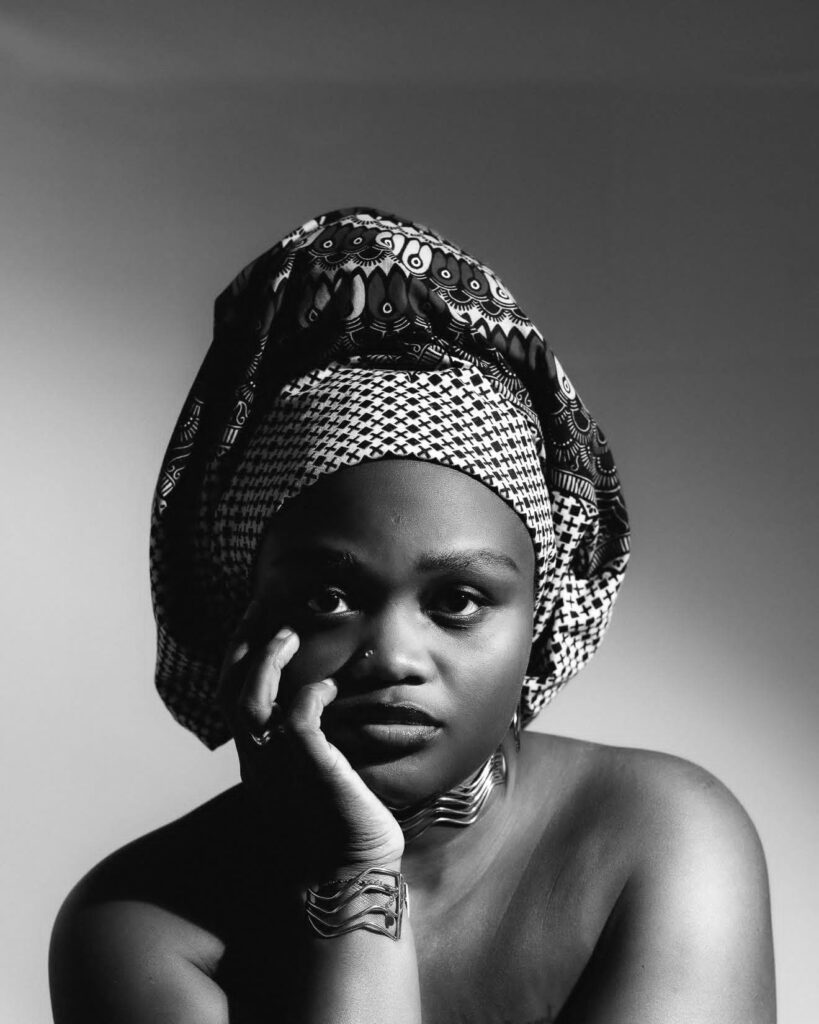
WAFRIC Awards 2026 Nominee Spotlight | Visual Artist of the Year | Côte d’Ivoire 🇨🇮
A photograph can preserve a face, but it can also preserve a story, a tradition and a sense of belonging. For Ivorian photographer and visual artist Karen Kouamé, the camera is a means of exploring cultural identity, reconnecting with heritage and documenting the stories that shape how people understand themselves and their communities.
Born in Abidjan and now based in Toulouse, France, Kouamé has developed an artistic practice that brings together portraiture, documentary photography, fashion imagery and fine art. Her work draws on African cultural traditions and Afro-diasporic experiences, exploring how memory and identity travel across generations and continue to evolve in contemporary society.
Her nomination for Visual Artist of the Year at the West African Citizens Awards (WAFRIC Awards) 2026 recognises a creative practice that places cultural storytelling at the centre of visual expression.
A Journey Back to Photography
Kouamé’s relationship with photography began in childhood, influenced by her father, who introduced her to image-making and helped cultivate her interest in visual storytelling.
Her professional journey, however, did not follow a straight line into the arts. She pursued academic studies across Côte d’Ivoire, Morocco and France, focusing on accountancy, economics and digital marketing before deciding to commit herself fully to photography in 2023.
That year, she enrolled at ETPA, a photography school in Toulouse, undertaking professional training that broadened her technical skills and artistic perspective.
Her return to photography was also shaped by personal reflection. In an interview with 54RUUM published in August 2025, Kouamé described how self-portraiture became an important means of reconnecting with herself and expressing experiences that were difficult to communicate in words.
This period helped shape an approach to photography that values emotional honesty alongside visual composition. Rather than treating an image as a simple record of appearances, she uses it to investigate the experiences, histories and identities beneath the surface.
Her background in economics and digital strategy also gives her a multidisciplinary foundation, bringing together analytical thinking, communication and creative practice.
Photography as a Language of Cultural Identity
One of the defining concerns in Kouamé’s work is the relationship between people and their cultural heritage.
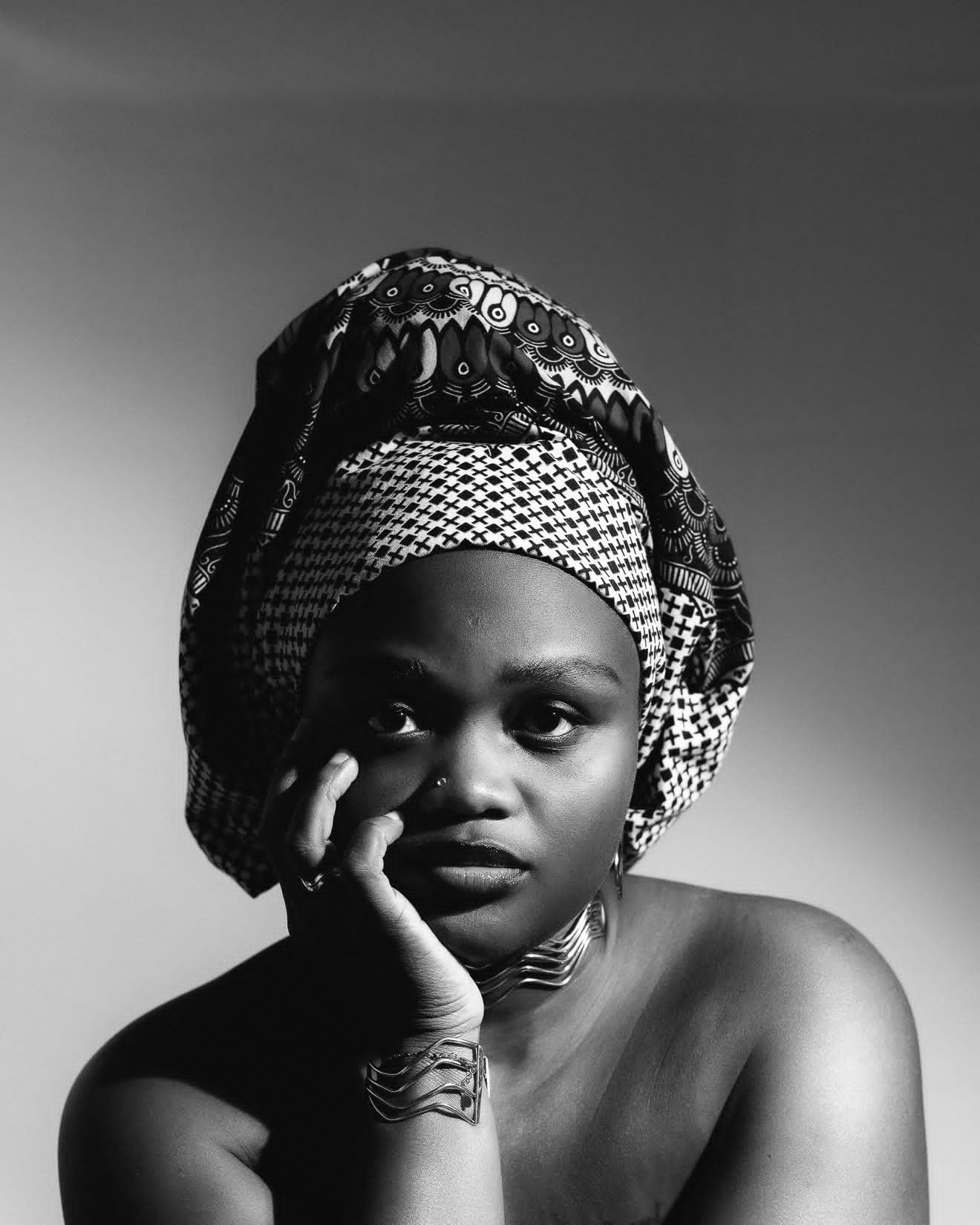
Her photographs explore identity, ancestral memory, resilience and the continuity of African traditions. Through portraits and carefully constructed visual narratives, she examines how cultural symbols, personal histories and collective experiences shape the way people see themselves.
This approach is particularly significant in Côte d’Ivoire, a country whose communities possess diverse traditions, languages and cultural expressions. Representing this diversity requires more than reducing identity to a costume or a familiar symbol. It calls for attention to the people, meanings and histories behind the images.
Kouamé’s practice seeks to celebrate that complexity. Her photographs invite viewers to look beyond appearances and consider the cultural knowledge and lived experiences that images can carry.
The artist has described her work as a way of honouring the richness of Afro cultures while creating connections between past and present. Her visual storytelling is therefore concerned not only with preserving what has been inherited, but also with understanding how traditions continue to live and change.
Teintes d’identité: Celebrating the Diversity of Côte d’Ivoire
A particularly clear expression of Kouamé’s artistic vision is ** Teintes d’identité **, a photographic project centred on the cultural diversity of Côte d’Ivoire.
The project uses distinctive portraits inspired by Ivorian communities and their cultural identities. Rather than presenting photography merely as documentation, Kouamé approaches each image as a considered visual interpretation of heritage, individuality and belonging.
The work encourages viewers to recognise the diversity within Ivorian identity and to appreciate the traditions that contribute to the country’s cultural richness.
In a rapidly changing world, such visual documentation can help keep cultural narratives visible for future generations. Photographs become a means of recording the present while inviting reflection on the histories that have shaped it.
The project was presented in the exhibition ** Shades of Identity ** at Labaraque Gallery in Abidjan from January 23 to February 14, 2026. The exhibition brought her exploration of cultural heritage into a gallery setting, creating an opportunity for audiences in Côte d’Ivoire to encounter the work in the context of contemporary art.
Her practice demonstrates how a personal connection to heritage can develop into a wider artistic conversation about cultural preservation, representation and the meaning of identity.
Beyond Portraiture: Fashion, Documentary and Fine Art
Although cultural identity remains central to her work, Kouamé’s practice is not confined to a single photographic genre.
Her portfolio spans portrait photography, fashion, editorial imagery, documentary work and fine art. These different approaches allow her to explore her subjects through varying relationships between people, settings, composition, colour and visual symbolism.
In fashion and portraiture, she uses the visual qualities of an image to express individuality and character. In documentary photography, the camera becomes a way of examining lived experiences and social realities. Her more conceptual work allows her to explore emotion, identity and symbolism through deliberate artistic choices.
This range reflects her willingness to expand her visual language rather than remain within a fixed style.
Her project Émotions pigmentaires, presented through ETPA’s portfolio, explores the face as a space for expression, using makeup, colours, textures and human expressions to communicate emotions. The series illustrates how photographic portraiture can move beyond representation and become a form of visual interpretation.
Across these different projects, her work remains connected by an interest in the human experience and the stories that can be communicated through images.
Heal by Hair: Photography, Women’s Experiences and Mental Health
Kouamé’s documentary practice also addresses social questions, demonstrating that her interest in visual storytelling extends beyond cultural heritage.
Her project ** Heal by Hair : Cheveux comme thérapie ** examines the relationship between hair salons, women’s experiences and mental health support in Africa. The documentary follows the work of the Bluemind Foundation, an organisation that trains hairdressers in mental health first aid.
The project explores how salons can become spaces where women feel comfortable speaking about personal challenges and finding opportunities for support. By documenting this environment, Kouamé draws attention to the role that familiar community spaces can play in conversations about emotional well-being.
Rather than approaching the subject as a distant observer, her photographic work seeks to communicate the human experiences behind the issue.
The project received the Special Jury Prize at ETPA’s Grand Prix Photographie 2026. The recognition highlighted the sensitivity of her visual storytelling and the significance of the subject she chose to document.
The award was an important professional milestone, demonstrating how photography can contribute to conversations about social realities while retaining its power as an artistic medium.
It also illustrates the breadth of Kouamé’s interests: the same camera used to explore cultural memory can also document contemporary experiences, amplify human stories and invite viewers to consider issues that may otherwise receive limited attention.
Building an Artistic Practice Across Borders
Based in Toulouse while maintaining a strong connection to Côte d’Ivoire, Kouamé works across geographical and cultural contexts.
Her international trajectory has given her opportunities to engage with different artistic environments while continuing to explore the heritage that informs her work. Her participation in Africa Foto Fair 2025 introduced her practice to an international photography platform, while her subsequent exhibition at Labaraque Gallery brought her cultural-identity project to audiences in Abidjan.
Her work has also appeared on PhotoVogue, an international platform showcasing photographers and visual storytelling.
These platforms provide opportunities for her images to reach audiences beyond a single location, allowing conversations about Ivorian heritage and Afro-diasporic identity to travel across borders.
For Kouamé, international visibility does not require abandoning local roots. Instead, her work demonstrates how a clear connection to one’s cultural background can become the foundation for stories that resonate with diverse audiences.
Why Karen Kouamé Is a WAFRIC Awards 2026 Nominee
The Visual Artist of the Year category recognises creative practitioners whose work contributes to the visual arts and the wider cultural landscape.
Kouamé’s nomination brings attention to an artist whose photography combines visual exploration with cultural storytelling. Her work on Teintes d’identité celebrates the diversity of Ivorian communities, while Heal by Hair demonstrates how documentary photography can engage with social experiences and generate meaningful conversations.
Her professional development—from an early interest in photography to formal training at ETPA, exhibition opportunities and recognition at the school’s 2026 photography awards—also reflects a sustained commitment to developing her craft.
What distinguishes the direction of her practice is the importance she places on the stories behind the images. Her photographs ask viewers to consider what is inherited, what is remembered and how cultural identity continues to take shape across generations.
As a visual artist of Ivorian origin working internationally, Kouamé contributes to a broader conversation about African representation, heritage and the role of contemporary photography in preserving cultural narratives.
Her nomination at WAFRIC Awards 2026 brings that work into a regional recognition platform celebrating creative and hardworking West Africans.
The 2026 edition carries the theme “Recognizing the Unseen. Celebrating the Exceptional.” Kouamé’s work reflects the value of looking closely at the people, traditions and experiences that help define a culture—and using art to ensure their stories remain visible.
Support Karen Kouamé
Karen Kouamé — Visual Artist of the Year, Côte d’Ivoire is a nominee at the WAFRIC Awards 2026.
Visit the official WAFRIC Awards public voting page to find her category and participate in the public voting process.
For details on how votes are considered alongside nominees’ achievements, contributions and impact, read the official voting procedures and winner-selection criteria.
Public voting runs until November 15, 2026. Public votes contribute to the process but do not alone determine the final winner; the selection also follows the published criteria.
WAFRIC Awards 2026 — Recognizing the Unseen. Celebrating the Exceptional.